Blown wool
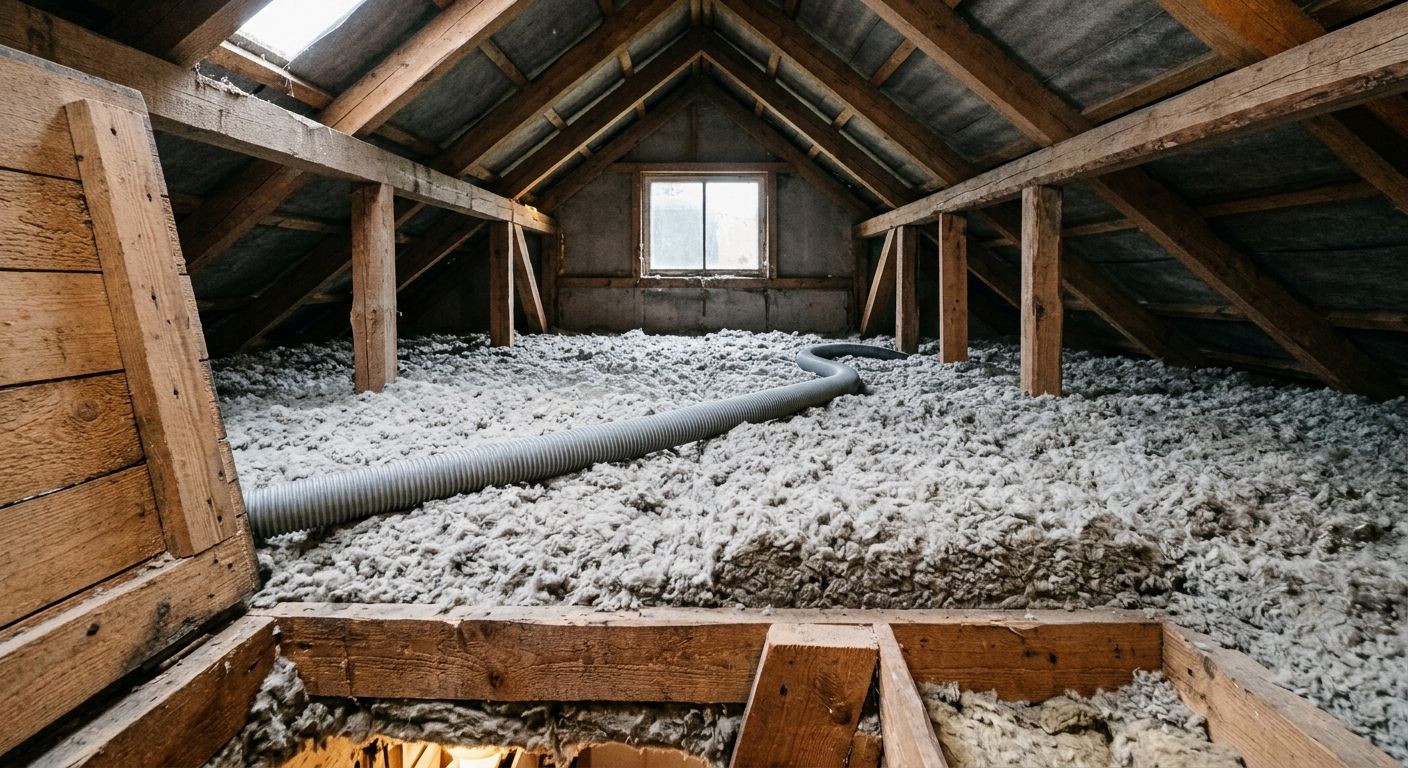
We blow loose mineral wool into ceilings, lofts and timber-frame walls. The layer fills every gap and leaves no seams.
Facts
- usual layer on a ceiling
- 300–500 mm
- thermal conductivity, W/mK
- λ 0.037–0.041
- fire class: non-combustible
- A1
- one continuous layer
- 0 seams
Blown wool is finely chopped mineral wool, delivered by machine through a hose into places where boards cannot fit tightly: between ceiling joists, into lofts, niches and closed timber-frame wall cavities.
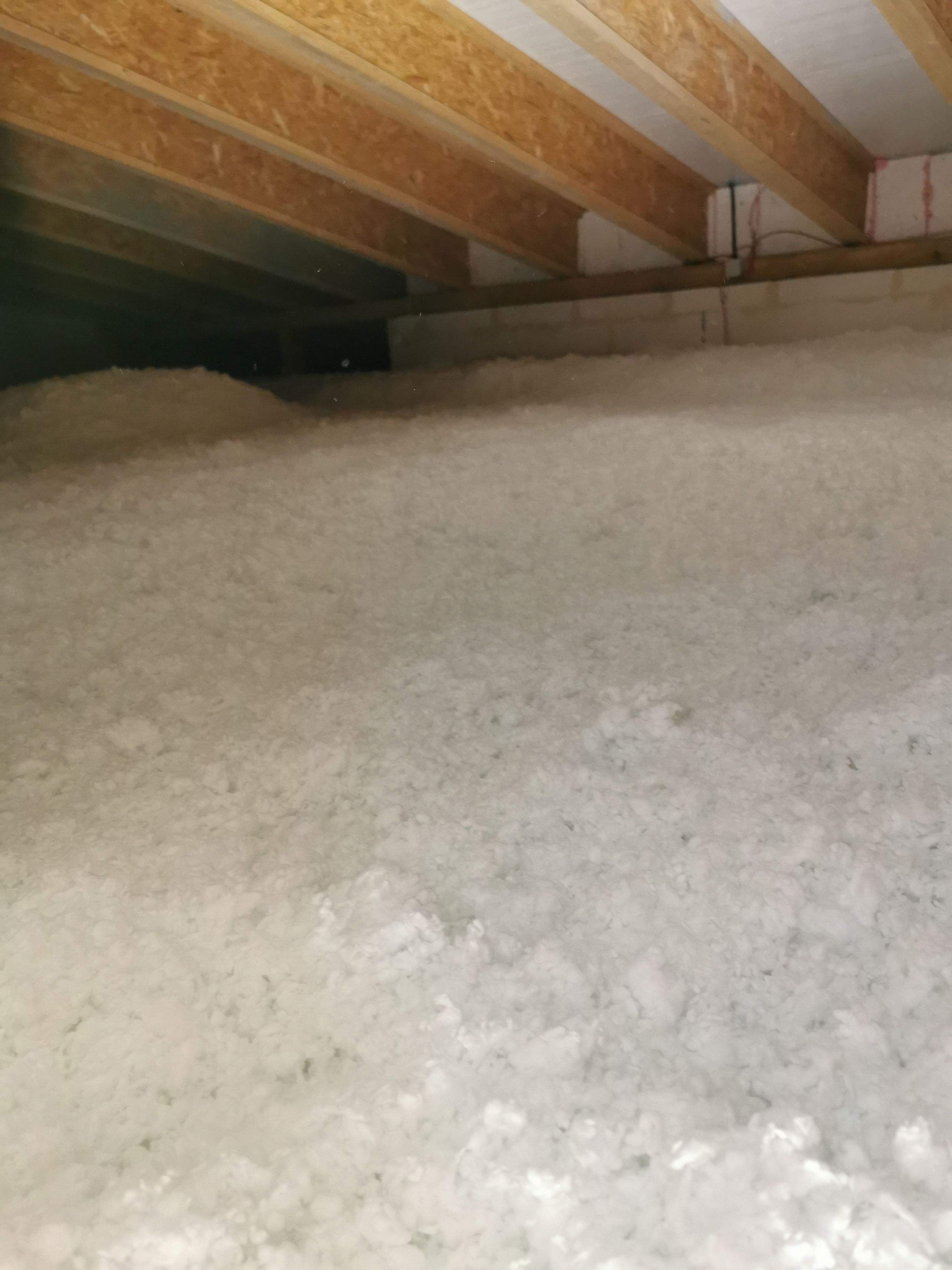
Blown wool wraps around joists, cables and pipes, so there are no gaps for heat to escape through. It is a fast way to insulate the ceiling of a new or an old house, often without removing any finishes.
Where we blow it
- Cold loft floors
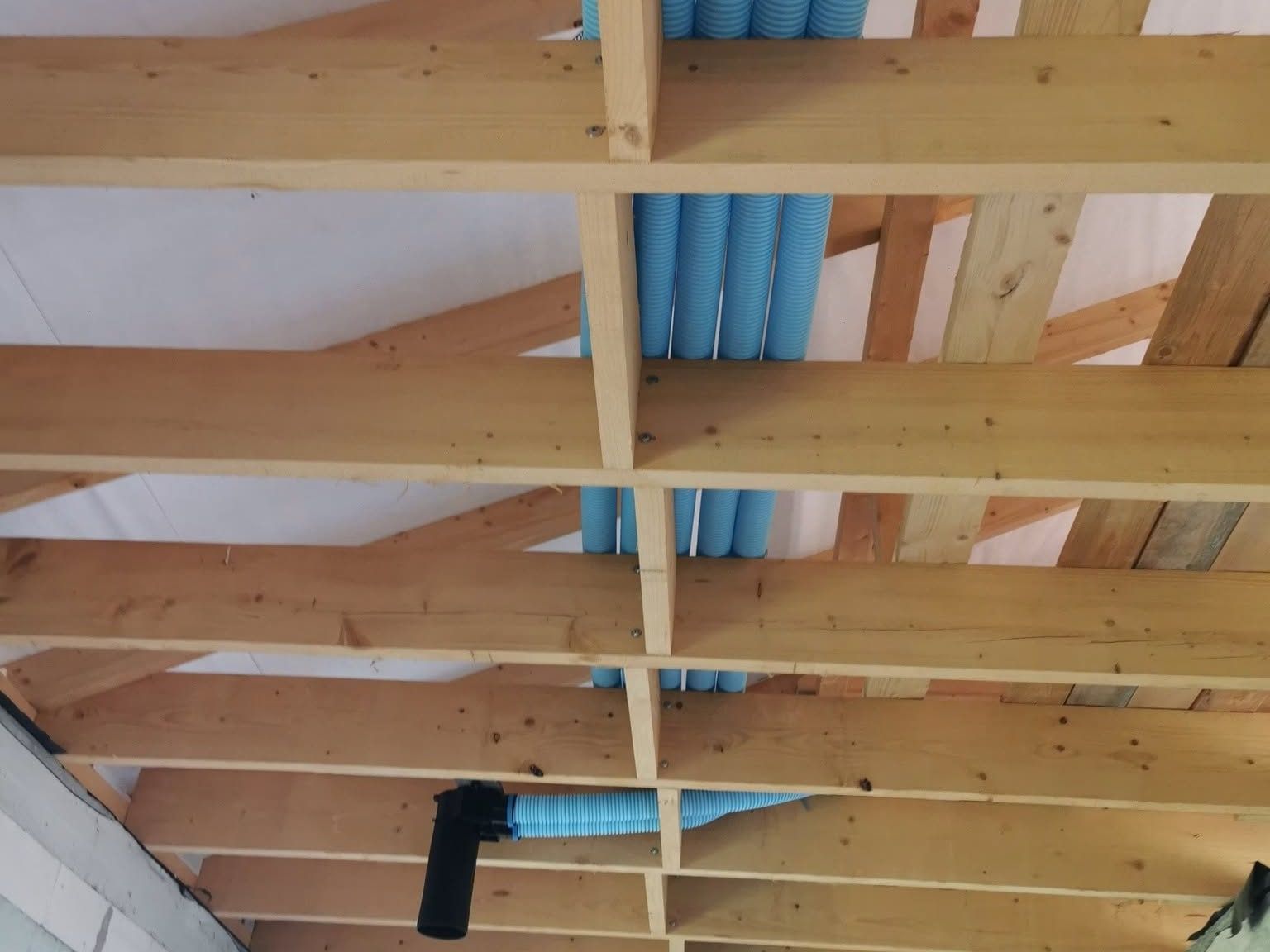
- Ceilings between timber joists
- Closed timber-frame wall cavities
- Niches and hard-to-reach spaces
- Old ceilings, without removing finishes
How we work
We assess
From the area, the ceiling build-up and the thickness you want, we work out the amount of wool and the price.
We prepare
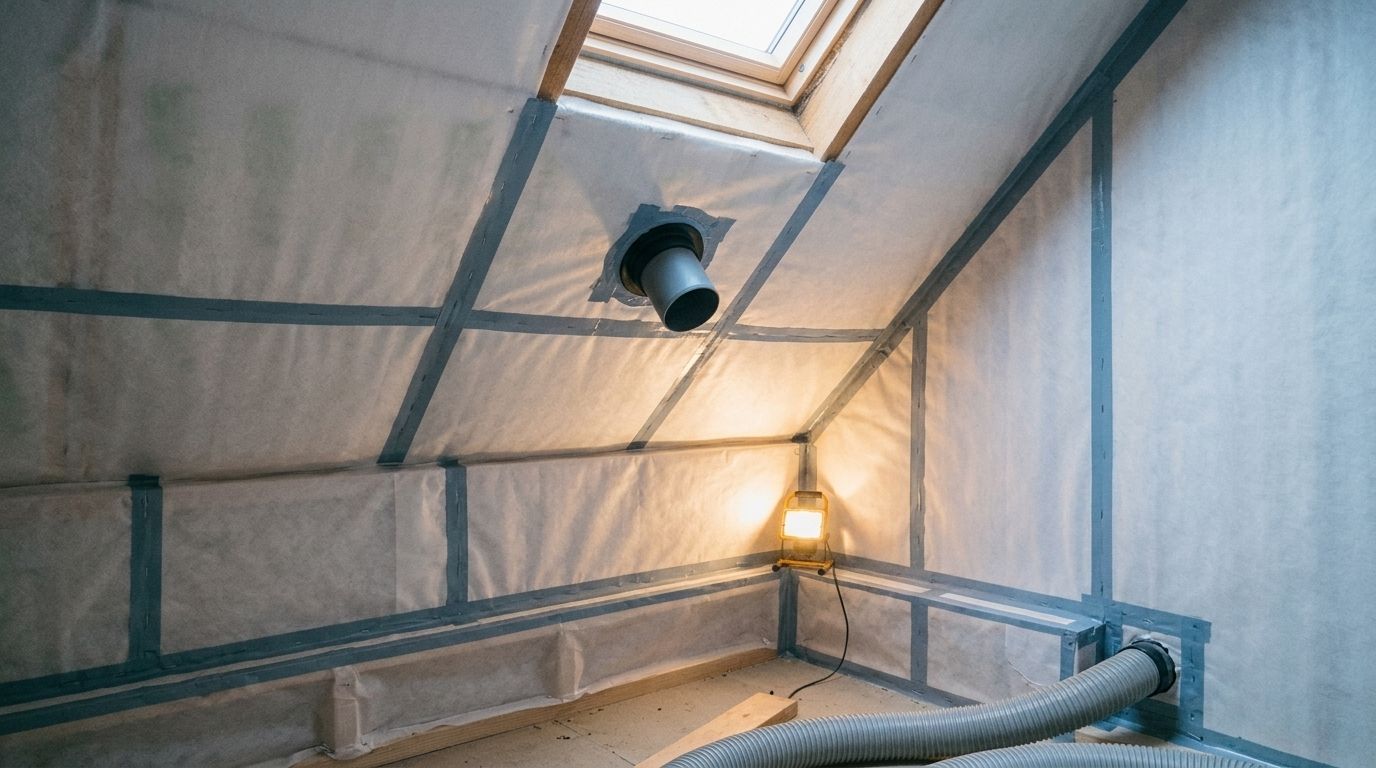
We check there is a vapour control layer under the wool and mark the target depth.
We blow
The machine stays outside; only the hose goes into the loft. We level the layer to the marked depth.
Questions
Does blown wool settle?
Mineral blown wool installed at the right density settles very little. Manufacturers state how much wool each square metre needs to keep its depth, and we follow that.
Can an old house be insulated this way?
Yes. Blown wool suits old houses because it can go on top of the existing ceiling or through small openings, without taking the ceiling down.
How long does it take?
It is one of the fastest ways to insulate: a typical house ceiling usually takes one working day. We give the exact time once we have seen the job.
Request a quote
Tell us what you want insulated and where. We will reply with a price.